
Cryotherapy Specialist
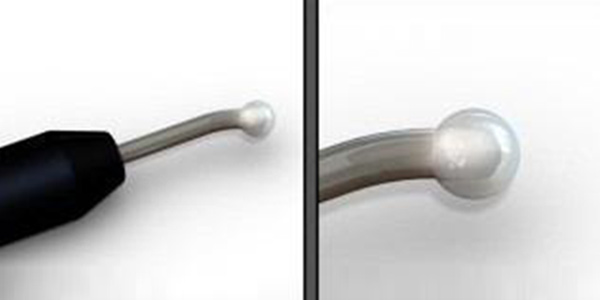
Cryotherapy involves the application of a small probe on the white part (sclera) of the eye to freeze underlying damaged retina. Condensed gas such as nitrous oxide or carbon dioxide cools the probe tip via the Joule Thompson principle. Temperatures reach about -70° causing the desired retinal adhesion / freezing inside the eye. Cryotherapy is most often used in conjunction with a pneumatic retinopexy to repair a retinal detachment. It is also used for retinal tears located in the far retina periphery unreachable by laser or when laser cannot be applied because of a hazy view into the eye (ie advanced cataract or vitreous hemorrhage). Cryotherapy can also be used for less common diseases such as Coat’s disease and vasoproliferative tumors to reduce fluid leakage from damaged blood vessels. Local anesthesia is applied making this procedure very comfortable. Usually an eye patch is applied afterwards and eye drops typically are prescribed to minimize inflammation and reduce the risk of infection.

Additional Treatments You May Like

Additional Treatments You May Like
- Macular Degeneration
- Scleral Buckling
- Uveitis
- Macular Edema
- Photodynamic Therapy (PDT)
- Degenerative Myopia
- Laser Photocoagulation
- Retinal Detachment
- Diabetic Retinopathy
- Lattice Degeneration
- Pneumatic Retinopexy
- OCT
- BRVO
- Inherited Retinal Disorders
- Macular Hole
- Flashes and Floaters
- Macular Pucker
- Angiography
- CRVO
- Cryotherapy
- Retinal Artery Occlusion
- Intravenous Fluorescein Angiogram
- Retinal Tear
- Vitrectomy
- AMD
- Intravitreal Injections
- Complications After Cataract Surgery
- CSCR
- Pars Plana Vitrectomy